Artificial Intelligence in Aviation: Promise, Progress, and Hurdles

  • 15 Aug 2025
  • Text & Charts by: Alton Aviation Consultancy

The aviation sector, like many other industries, is increasingly turning to AI to improve operational efficiency, manage rising workloads, and enhance customer experience. While AI is anticipated to revolutionise the industry, there remain technical and regulatory hurdles yet to be overcome.

The adoption of AI in the aviation sector will unlikely experience a “big bang” revolution. As the impact of AI becomes increasingly apparent in the coming years, more incremental AI applications such as scheduling and resource planning seem the most viable for now.

In this Aerospace Singapore feature, Alton Aviation Consultancy explores the current state of AI in the aviation sector and the key challenges hindering broader adoption, and seeks to answer three main questions:

  • What are the current trends and outlook for AI in aviation?
  • What are some aviation use cases for AI?
  • What are the main challenges to AI adoption in aviation?

Trends and Outlook

The aviation sector has seen significant interest around the adoption of AI. While there is considerable media attention on potential groundbreaking innovations such as predictive flight optimisation and automated air traffic control, these remain a long way from reality due to the substantial technical and regulatory hurdles ahead.

For the time being, use cases that span across different industries—such as customer service, data analytics, and administrative work—may be the most likely to be adopted as the broader user base allows new technologies to more quickly aggregate data, develop learning models, and build up an established track record of accurate and optimised outputs. Companies will rely on AI to do more with less, by using AI models and workflows to support and automate manual processes and procedures, augment and improve human decision-making ability, and help enterprises generate their own solutions (e.g., chatbots) through large language models (LLMs).

In the medium term, there is some potential for regulated use cases in aviation, with companies engaging in experiments and proofs of concept in areas such as flight operations, airworthiness management, and air traffic control. Thus far, few of these have materialised into definitive products, as users are wary of risk around output accuracy, application control, and data security. It is still likely that AI models will initially work in tandem with human-in-the-loop decision-making, to ensure that there are checks and balances to the AI-generated outputs.

From Tarmac to Tower: AI Use Cases Across the Aviation Ecosystem

AI promises benefits for stakeholders across the aviation ecosystem, including airports, airlines, Original Equipment Manufacturers (OEMs), Maintenance, Repair, and Overhaul (MRO) providers, and Air Navigation Service Providers (ANSPs).

Airports: Enhancing Efficiency and Passenger Experience

Use cases are being trialled or already deployed in the airport environment, both in the passenger journey and for back-end processes:

  • Passenger flow management
  • Baggage tracking and handling
  • Allocation of aircraft to gates
  • Biometrics for security clearance
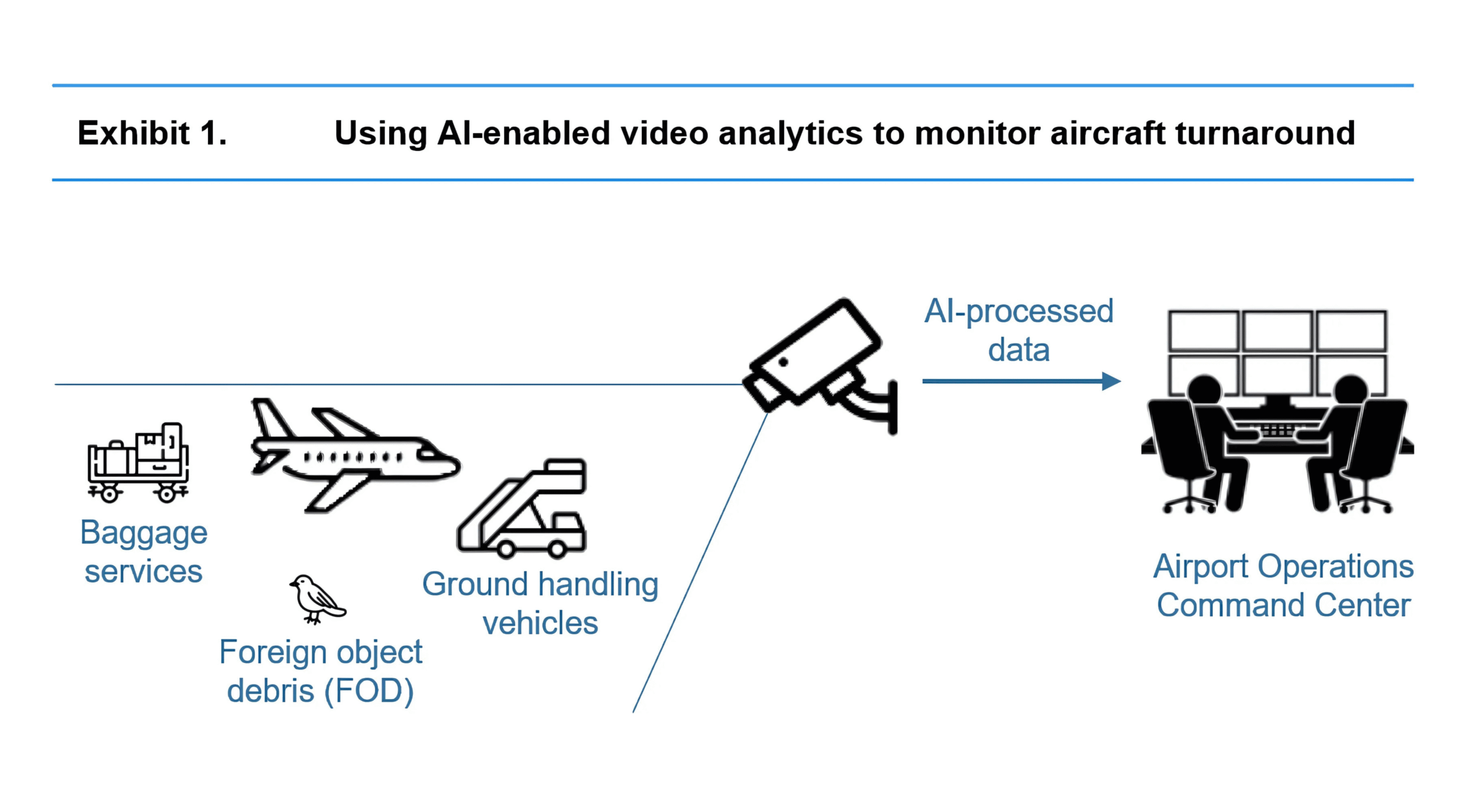
One area where AI could make an impact is in Total Airport Management (TAM), the concept of allowing airport stakeholders to exchange information and coordinate activities to improve an airport’s overall operational efficiency and asset utilisation. For example, cameras could be used in conjunction with AI-enabled video analytics to monitor aircraft movement and the status of aircraft turnaround tasks such as removal of waste, stocking up   of galleys, and loading of cargo. Completion or delays to one task would trigger other dependent tasks, allowing resources to be allocated more efficiently.
 
However, the deployment of such solutions may entail data privacy concerns. For instance, cameras could capture and store images of personnel, infrastructure, and sensitive areas. Security constraints also play a role—installing cameras in the airport airside is subject to stricter regulations due to heightened security requirements. To ensure a smooth rollout of AI technologies in airports, developers and users must collaborate closely with aviation regulators, security agencies, and data protection authorities

Airlines: Optimising Operations and Personalisation

Airlines are expected to employ AI to reduce costs, increase revenue, and improve customer service:

  • Reaccommodating passengers in cases of mass disruption
  • Optimisation of schedule management and crew assignments
  • Personalisation of passenger servicing
  • Tailoring the marketing of ancillary products (e.g., loyalty programmes, seat selection)
  • Chatbots to answer passenger questions related to bookings, refunds, and service recovery

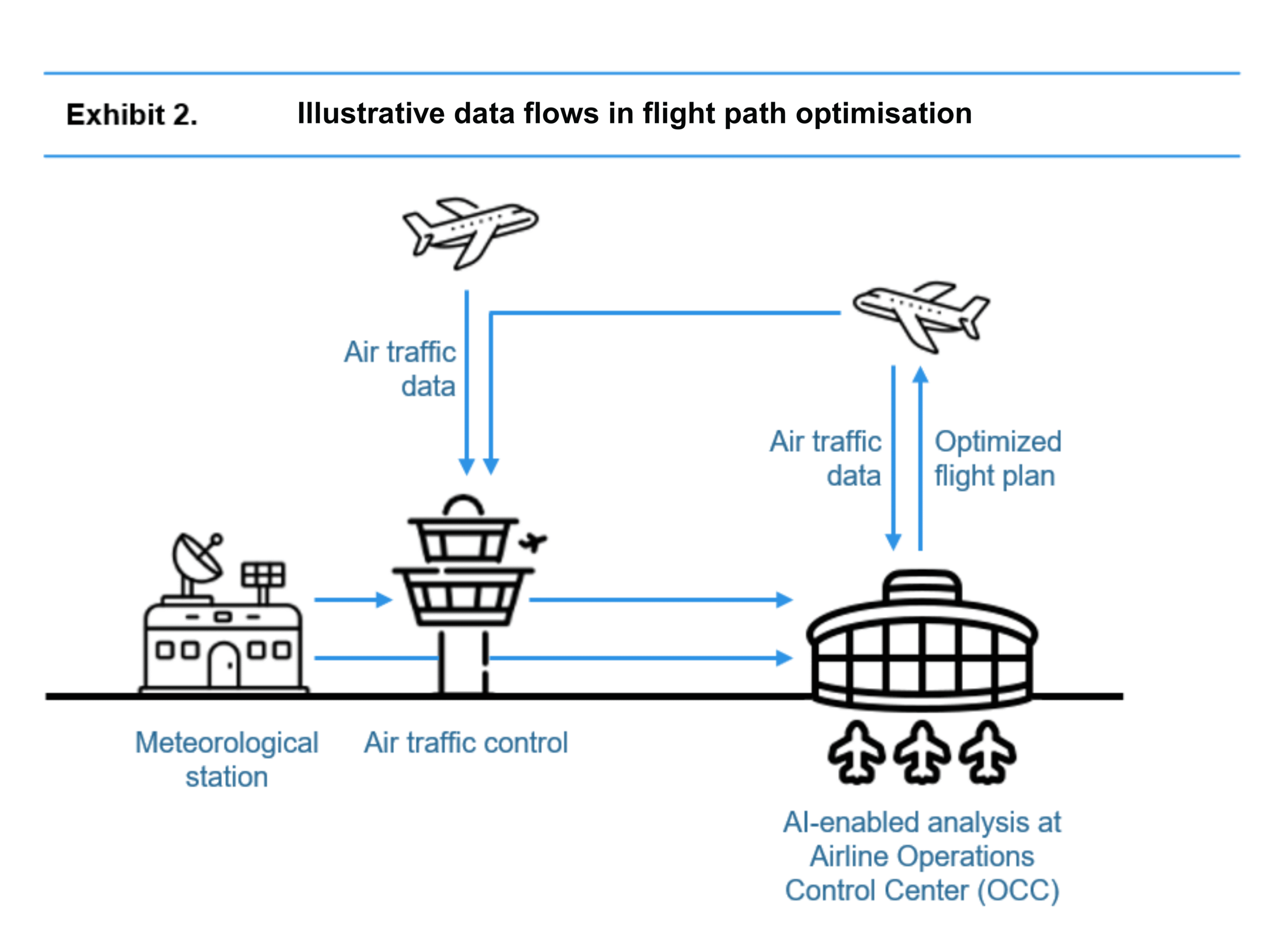
One use case that could help airlines reduce costs is flight path optimisation, which uses AI to analyse changing weather patterns, winds, turbulence, airspace constraints, and air traffic volume to recommend an optimised flight path. This promises a smoother journey for the passenger with less turbulence, brings them quicker to their destination, and reduces fuel spend for the airline, and in turn reducing the flight’s carbon footprint.

Another application of AI for airlines is in revenue management, where technology is used to provide accurate demand forecasting and real-time dynamic pricing to optimise ticket inventory and yield. In other words, airlines could use AI to price their tickets and package offers in a way that better aligns with market demand.

ANSPs: Supporting Safe and Scalable Air Traffic Management

As with other aviation stakeholders, AI is also emerging as a transformative enabler for Air Navigation Service Providers (ANSPs). AI can be utilised in augmenting the information flow and decision-making ability of air traffic controllers to help them better manage air traffic complexity, improve safety, and enhance operational efficiency through:

  • Data incorporation and management
  • Conflict resolution
  • Anomaly detection
  • Flow management
  • Dynamic sectorisation

The adoption of AI is expected to help air traffic controllers more easily ingest a wider variety of data formats, for better situational awareness and more optimal decision-making. This capability would, in turn, support other use cases such as conflict resolution and anomaly detection.

More prominently, AI can play a bigger role in predicting traffic patterns based on weather forecasts, flight plans and airspace constraints to proactively adjust and smoothen traffic flows. A related concept is dynamic sectorisation to reconfigure airspace sectors based on traffic demand, weather conditions, and controller workload. This will enhance the flexibility and responsiveness of air traffic management systems – especially in complex or congested airspaces, optimising sector workloads and better aligning airspace demand with capacity.

MROs and OEMs: Maintenance and Operational Insights

Although less visible to the public compared to airports and airlines, AI has also made inroads into aircraft manufacturing and maintenance for processes such as:

  • Inspection for wear and tear
  • Parts inventory management
  • Manpower optimisation
  • Planning maintenance schedules based on real-time data
  • Troubleshooting and defect rectification

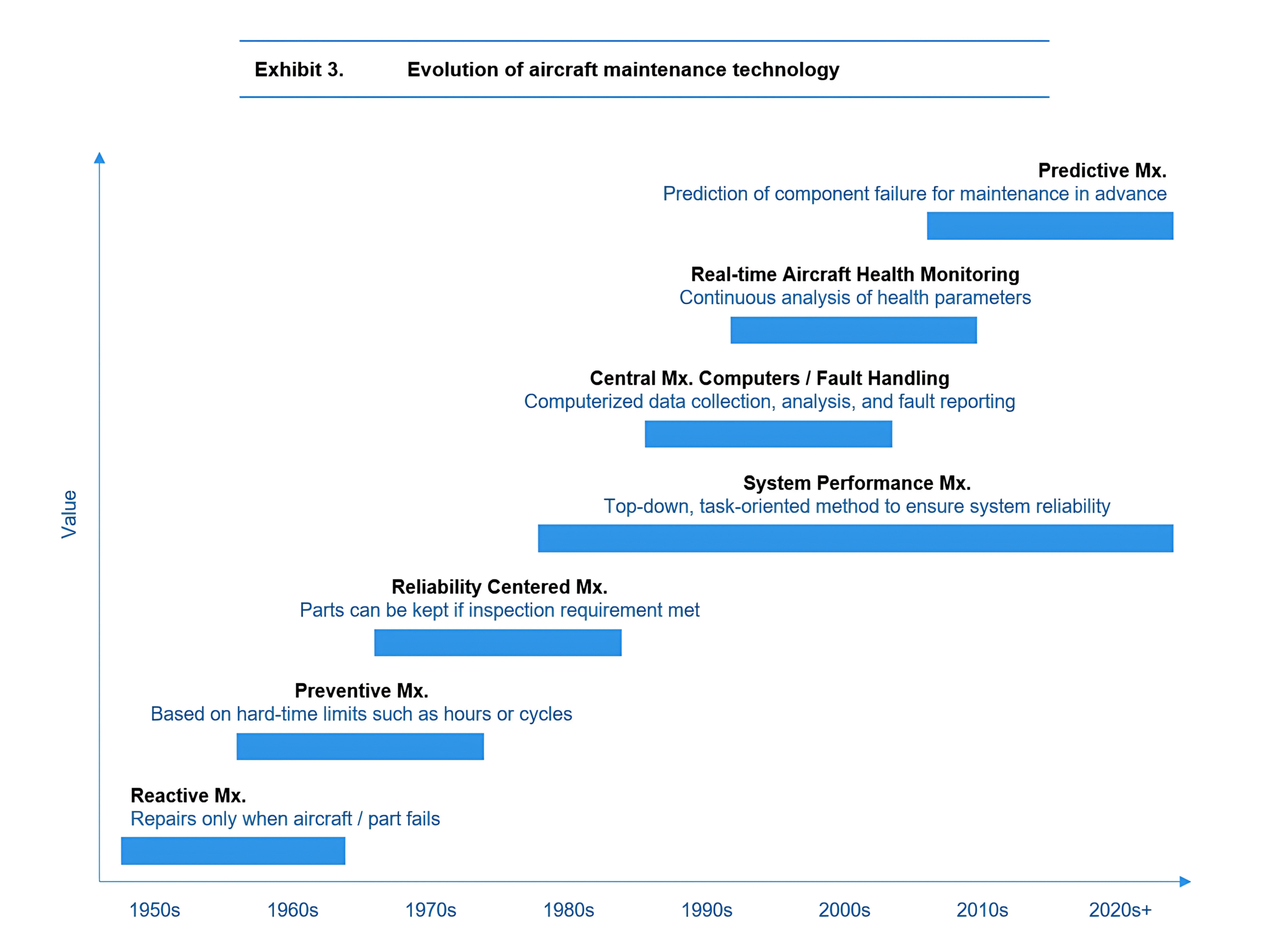
Over the years, the rapid accumulation of knowledge and experience from aircraft operations has transformed the focus of aircraft maintenance and led to the development of specific maintenance methodologies.

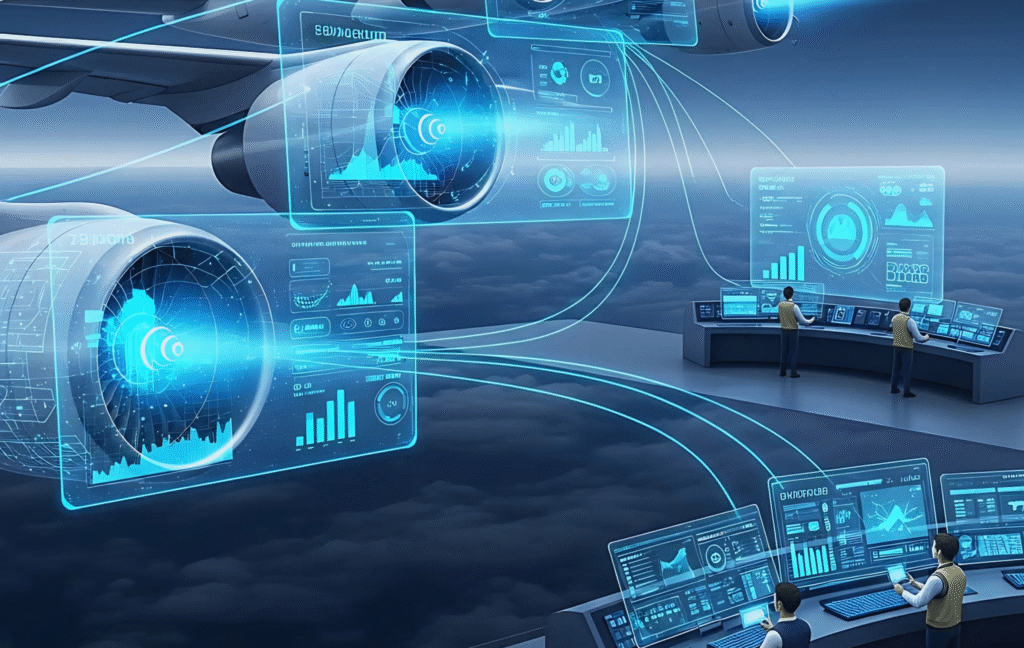
In the past, aircraft maintenance was either reactive — addressing issues only after they occurred, leading to unexpected downtime and disruptions — or preventive, following rigid schedules that didn’t reflect the actual condition of aircraft components. Today, the industry has largely shifted toward continuous system health monitoring and analysis. This approach enables the prediction of maintenance needs before failures happen, significantly reducing unexpected downtime and enhancing the reliability, efficiency, and overall effectiveness of aircraft maintenance.

Such predictive maintenance is based on an AI-enabled assessment of data from sensors, flight data recorders, etc., allowing for a data-driven approach to anticipate potential failures before they occur. These technologies will benefit airlines as they predict potential maintenance events and preemptively plan and schedule appropriate maintenance tasks to minimise unplanned downtime that could lead to delays and flight cancellations, while maximising fleet availability.

Turbulence Ahead: Key Barriers to AI Adoption in Aviation

Despite the promising potential of AI in aviation, several obstacles must be addressed before widespread adoption can occur.

Data Privacy, Ownership, and Security

Given the sensitive nature of passenger information, including personal details, travel history, and payment data, stakeholders are often wary of the potential for data breaches or misuse. Both real and perceived risks could lead to a lack of trust in AI systems, preventing airlines and airports from collecting and sharing the large volumes of data required to train effective AI models.

Data ownership also presents an obstacle to AI adoption, as data collection and storage is fragmented and controlled by multiple stakeholders. For example, data from a typical passenger journey would pass through the hands of airports, airlines, immigration authorities, and ground handlers, each with its own data policy, creating challenges in sharing and accessing the necessary information for AI systems to function effectively.

Regulatory compliance, such as adherence to the EU General Data Protection Regulation (GDPR) and other data protection laws, further complicates the adoption of AI. Even if stakeholders were to institute robust cybersecurity frameworks and transparent data handling practices, they would still need to contend with a patchwork of dynamic regulations globally, with no certainty on the direction of future regulatory requirements.

Investment and Training Costs

Investment and training costs pose a significant challenge to AI adoption in aviation, particularly when it comes to the time and resources required to train AI models with the relevant datasets. The process of collecting, cleaning, and structuring data to create a learning environment for AI models is both time-consuming and expensive, especially when dealing with complex use cases such as managing flight disruptions. These involve numerous variables, such as weather conditions, crew availability, and passenger preferences, which can be difficult to codify into clear algorithms, or rely on other stakeholders who may be unwilling to share data.

Apart from training AI models, there is also the challenge of upskilling staff and change management, where staff would need support to use and trust machines and data models on one hand, and understand AI’s limitations on the other, including cases where human intervention is required.

In addition, the need for specialised expertise to develop, implement, and continuously refine these systems further increases the investment burden. Airlines and other aviation stakeholders must weigh the substantial upfront costs against the potential long-term benefits of AI integration, which may discourage investment without clear, demonstrable returns.

Legacy Systems and Integration Issues

Aviation stakeholders hoping to adopt AI may face challenges associated with integration. One of the primary obstacles is the lack of available data needed to build training datasets. For example, older systems often rely on paper or PDF records, which need to first be digitised and stored into structured databases before they can be processed.

In addition, many organisations continue to use legacy operating systems or code environments such as IBM Mainframe, which are more difficult for newer computing languages and technologies, including Java, JavaScript, C++ etc, to build upon. Moreover, there may be system incompatibility between newer cloud deployments and older on-premise solutions, further complicating the transition to AI-driven systems.

Charting a Pragmatic Path Forward

AI is set to play an increasingly larger role in aviation by improving operational efficiency and enhancing customer service. However, numerous challenges, including technical and regulatory issues, must be addressed before its full potential can be realised.

As such, any adoption of AI in the sector is likely to be incremental rather than revolutionary. Human-in-the-loop decision-making will continue to be needed in the foreseeable future, ensuring that AI augments rather than replaces human expertise. As regulatory frameworks evolve and technologies mature, collaborative efforts among governments, industry stakeholders, and technology developers will be crucial to realising AI’s transformative promise in aviation.

Visit altonaviation.com/insights/ for more proprietary data, expert analysis and fresh perspectives

You May Also LikeAAIS