Aerospace, Aviation, Global, Mro, News


Starlink, the satellite broadband network operated by SpaceX, has announced a major reconfiguration of its constellation in 2026, aimed at improving space safety amid growing concerns over congestion in low Earth orbit. The company plans to lower the operating altitudes of roughly 4,400 satellites from about 550 km to 480 km, to reduce collision risks and accelerate the natural re-entry of defunct spacecraft.
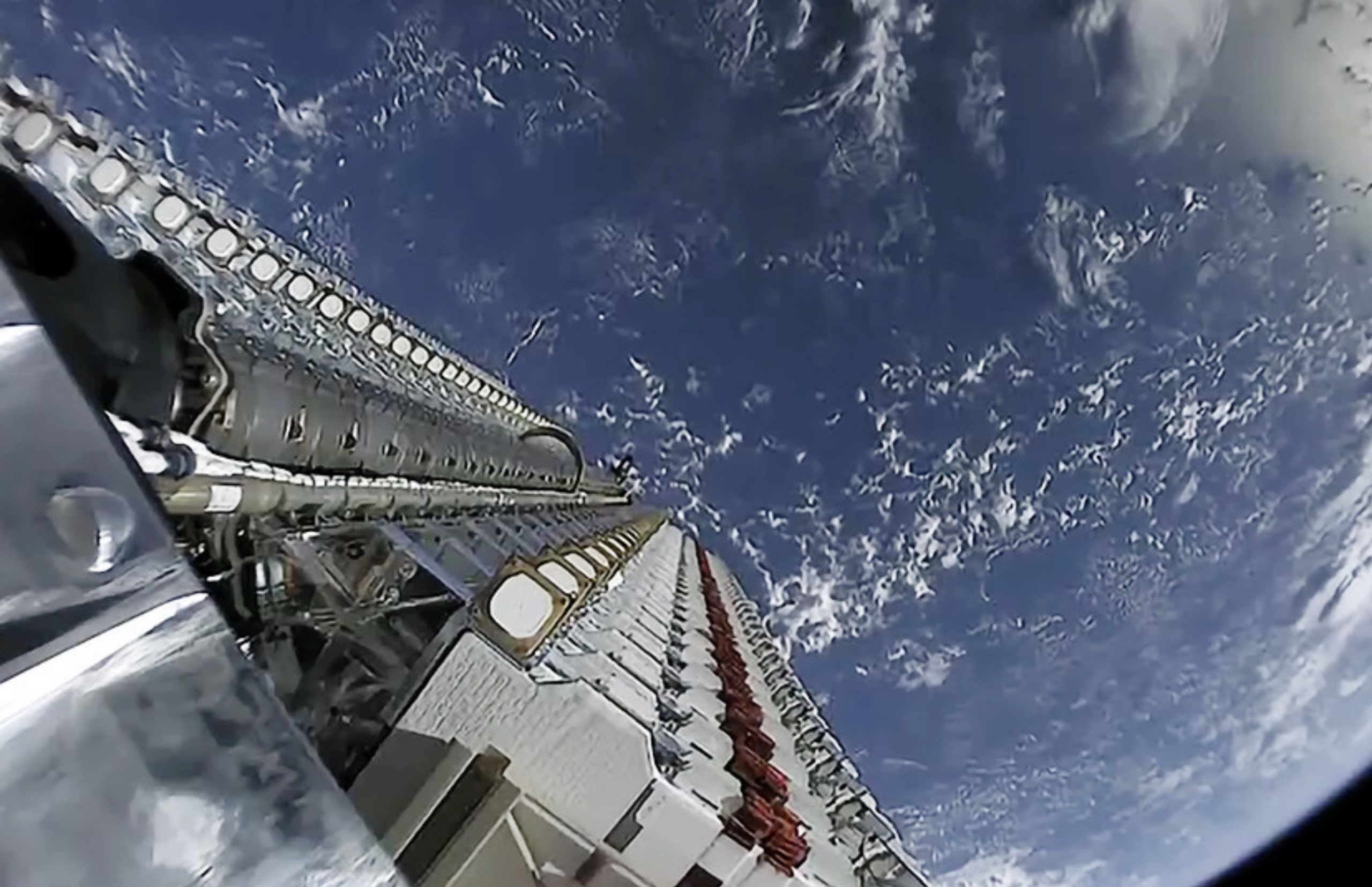
Starlink Mission. Photo: SpaceX
The move was confirmed by Mr Michael Nicolls, Starlink’s vice‑president of engineering, via X. He highlighted that the adjustment is linked to the approaching solar minimum — the low point in the Sun’s cycle — and its effect on atmospheric density. “Lowering will mean a >80% reduction in ballistic decay time in solar minimum, or more than four years reduced to a few months,” he said. While stressing the “extremely high reliability” of Starlink satellites, with only two dead satellites in a fleet of over 9,000 operational satellites, Mr Nicolls noted: “If a satellite does fail on orbit, we want it to deorbit as quickly as possible. These actions will further improve the safety of the constellation, particularly with difficult-to-control risks such as uncoordinated manoeuvres and launches by other satellite operators.”
Concerns over orbital congestion were underscored by SpaceX, which reported a close approach between a Chinese-launched payload and a Starlink satellite in December 2025. One of nine satellites deployed from a Chinese rocket was said to have passed within 200 metres of a Starlink spacecraft at speeds exceeding 28,000 km/h, a close encounter that could have generated catastrophic debris. SpaceX noted the lack of coordination with existing operators, highlighting the need for better deconfliction protocols worldwide.
In turn, in early January, a Chinese representative warned at an informal UN Security Council meeting that the rapid growth of Starlink and similar mega-constellations posed “pronounced safety and security” risks in low Earth orbit, citing near-collision incidents with China’s space station and the crowding of shared orbital and radio-frequency resources. It urged stronger international regulation of commercial space activities to mitigate these hazards.
Mr Nicolls noted the shell lowering would be tightly coordinated with other operators, regulators, and USSPACECOM.
Experts say the move represents a proactive step in responsible constellation management, balancing operational performance with orbital safety as traffic in low Earth orbit grows.





Welcome to the Aerospace Singapore Digital beta site! Feel free to explore, leave your feedback, or sign up for our mailing list!
Sign up for our free newsletter and never miss a beat! Be the first to know about our latest articles, latest news and trends in our industry.