Aerospace, Community-youth, Featured-articles, Features-people, Global, Innovation, Singapore, Uas, Youth


Airbus has previously announced that its A350F freighter programme is making steady progress, with major industrial milestones achieved as the first development aircraft enters the final assembly stage. The programme has also secured a 54% market share in the new-generation large freighter market, as announced in February 2026.
The programme is now fully underway industrially. Assembly of the first aircraft, the MSN 700, has been ongoing since the third quarter of 2025, while sections for the second development aircraft, MSN 701, are arriving at the Final Assembly Line (FAL) in Toulouse, France. According to Crawford Hamilton, Head of Freighter Marketing at Airbus, the programme is advancing in line with its development plan. “It reinforces our confidence in the aircraft, the programme’s execution and our long-term freighter strategy,” he added.
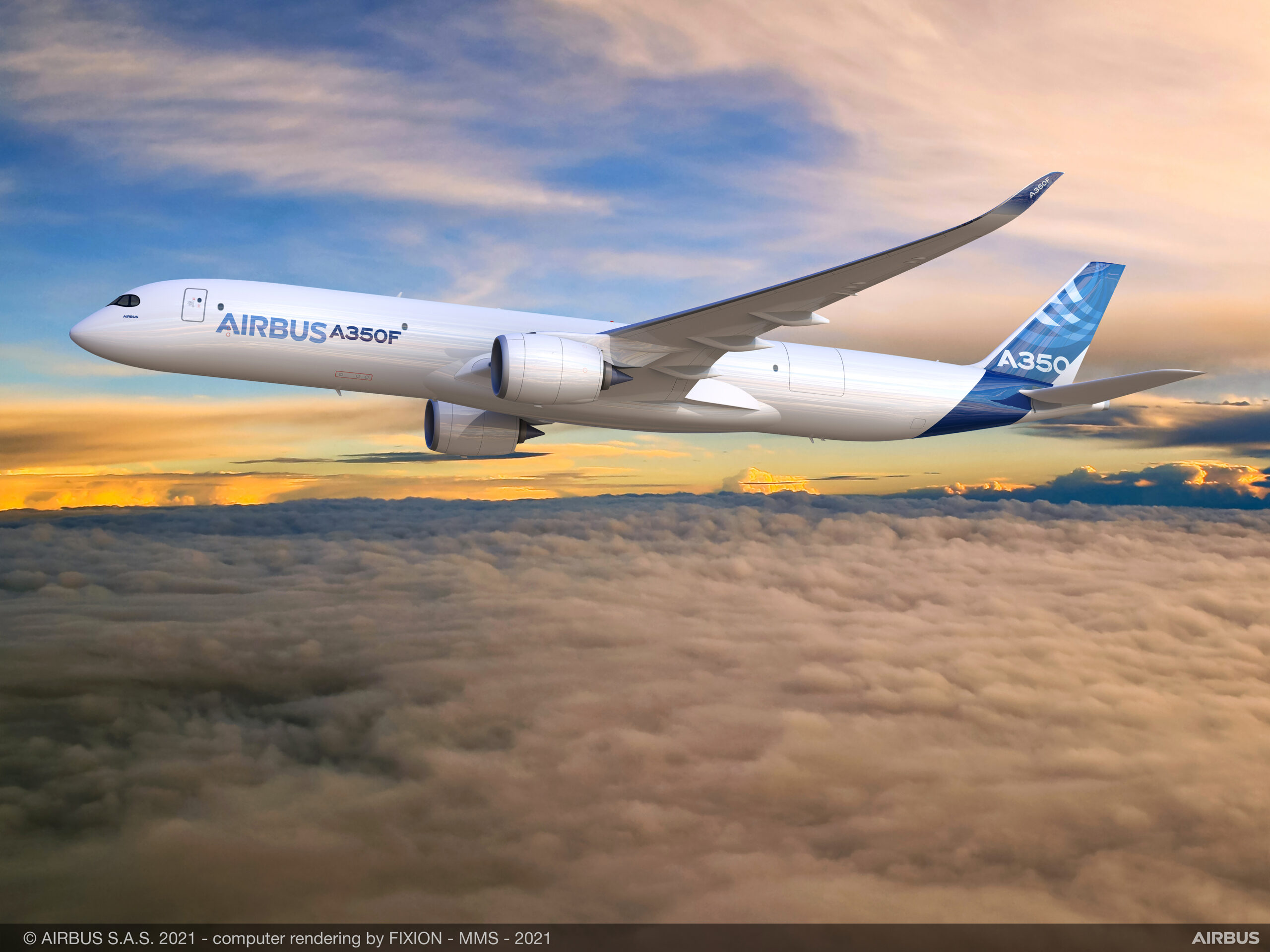
An image of the A350F. Image: Airbus
Airbus remains on track for the A350F’s first flight later in 2026, with entry into service targeted for 2027. A two-aircraft flight test campaign involving MSN 700 and MSN 701 will be conducted. Covering around 600 hours in total, the light flight text campaign will involve various areas such as the cargo loading system, main deck cargo door, environmental control system and smoke detection.
The A350F certification basis has already been set with EASA, and multiple full-scale development and certification test benches are already operational. These benches aim to reduce risks in the flight test programme and ensure high level of maturity at entry into service.
A standout feature of the A350F is its composite main-deck cargo door, the largest of any commercial aircraft, with a 4.3-metre opening width and an electrically powered opening system aligned with the A350’s architecture. Positioned at the rear fuselage, the design helps to maintain a safe centre of gravity during loading.
Asia-Pacific continues to be a key growth market for the A350F, with recent commitments including order conversions and new order purchases from major regional carriers such as Korean Air, Air China Cargo and STARLUX Airlines. This follows earlier orders from Cathay Cargo and Singapore Airlines Cargo. In 2025, air cargo traffic in the Asia-Pacific region grew by 9%, outpacing global averages, driven by expanding industrial economies. Airbus predicts a demand for 2,605 new freighters globally over the next 20 years, with Asia-Pacific expected to account for about one-third of deliveries.


Welcome to the Aerospace Singapore Digital beta site! Feel free to explore, leave your feedback, or sign up for our mailing list!
Sign up for our free newsletter and never miss a beat! Be the first to know about our latest articles, latest news and trends in our industry.