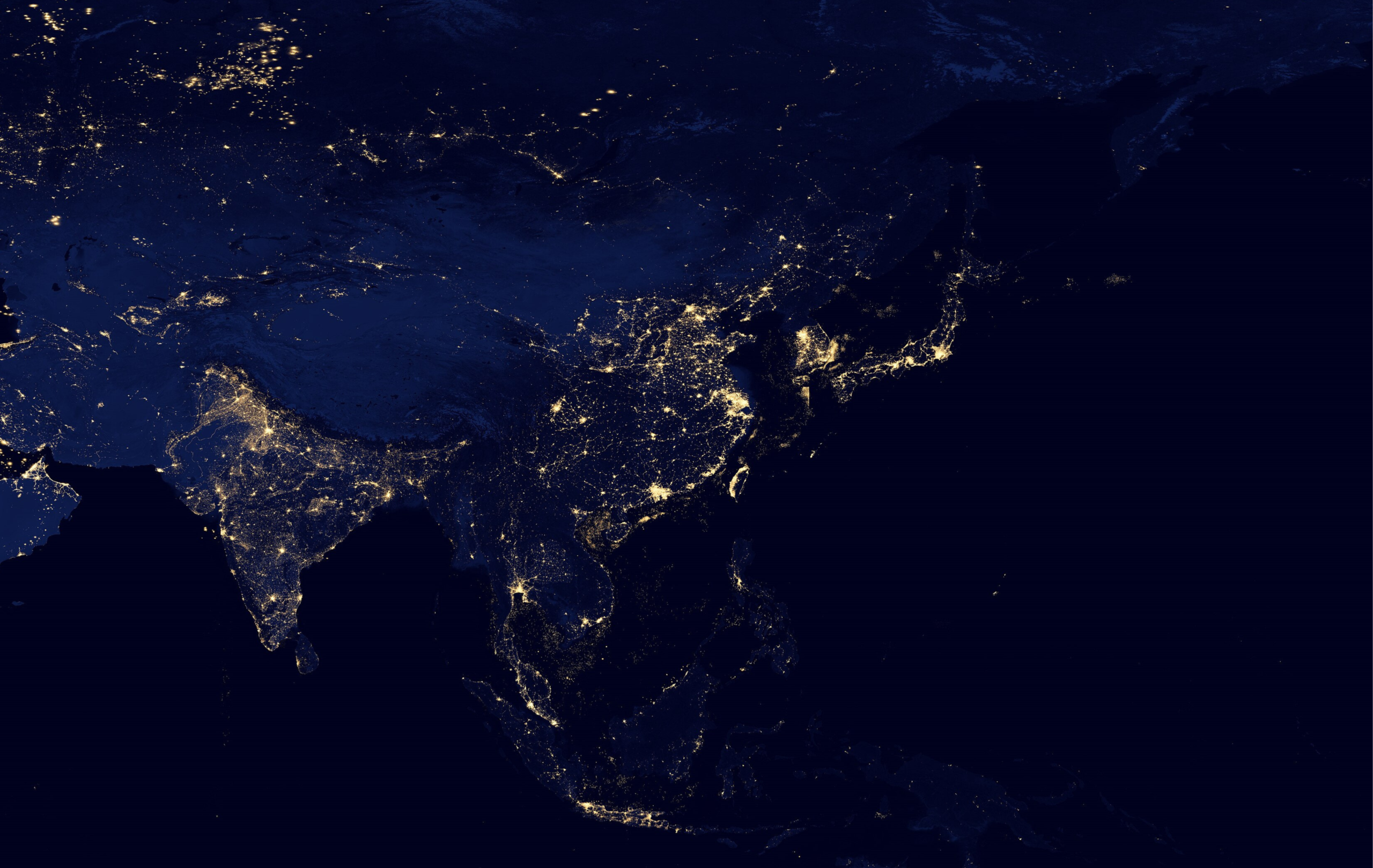
The Asia-Pacific region has been seeing growing investments in space-related capabilities and an acceleration of national and commercial space programmes. From satellites and launch systems to ground infrastructure and support services, a broader range of economies are strengthening their positions in space, each guided by strategic and policy priorities that collectively contribute to a more complex regional ecosystem.
The region’s space sector is also shifting its focus from standalone assets to more integrated, service-oriented models. Increasingly, value is being generated through the application of space-derived data, connectivity, and analytics across a wide range of civilian and commercial uses, while manufacturing and infrastructure activities are evolving towards more scalable and interoperable platforms.
In this Aerospace Singapore feature, Frost & Sullivan examines how the Asia-Pacific space ecosystem is evolving and the emerging opportunities that will define its next phase of growth.
The Asia-Pacific Space Landscape
The global space industry has entered a phase of sustained commercial expansion, moving well beyond its traditional government-led and defence-centric origins. What was once a niche domain dominated by a handful of national space agencies is now a dynamic, multi-layered ecosystem encompassing satellite manufacturing, launch services, ground infrastructure, data analytics, downstream applications, and emerging in-orbit services. Declining launch costs, advances in miniaturisation, and rapid progress in digital technologies have collectively lowered barriers to entry, enabling a broader range of private companies, start-ups, and mid-tier suppliers to participate in the space value chain.
Across Asia-Pacific, sustained investment in satellite technology, space launch capabilities, and enabling infrastructure is reshaping the regional space landscape. Countries such as India, Japan, the Republic of Korea, the Philippines, Singapore and Taiwan are emerging as prominent players, each pursuing distinct strategic objectives aligned to national priorities.
India’s focus on cost-effective launch services and small satellite deployment, Japan’s emphasis on advanced space systems and deep-space exploration, Korea’s growing indigenous launch and satellite manufacturing capabilities, and Taiwan’s strengths in electronics, semiconductors, and precision manufacturing together illustrate the region’s diverse yet complementary capabilities. Meanwhile, emerging space programmes in Southeast Asia, including the Philippines, are increasingly centered on downstream applications and capacity-building to support national development and resilience objectives.
Singapore occupies a distinctive position within the Asia-Pacific space ecosystem, anchoring itself as a downstream-focused, commercially oriented space hub rather than a traditional launch or manufacturing power. Its space journey has been shaped by access to Asia Pacific markets, offering regulatory clarity, access to capital, and a clear emphasis on space-enabled applications, data analytics, and systems integration that deliver immediate economic and societal value. By leveraging its strengths in digital infrastructure, advanced manufacturing, electronics, and financial services, Singapore has positioned itself as a regional centre for satellite data utilisation, mission operations, and space-derived services.
The city-state’s emphasis on earth observation analytics, satellite communications, and space situational awareness aligns closely with national priorities in urban planning, maritime security, climate resilience, and smart nation initiatives. Strong government backing, coordinated policy frameworks, and active participation from research institutions and industry players have fostered a robust environment for start-ups, global space firms, and defence adjacent technology providers. As a result, Singapore is increasingly acting as a gateway for space companies seeking a highly connected innovation ecosystem that accelerates the commercialisation of space technologies and applications.
A broadly conducive investment environment underpins this momentum, with governments, sovereign funds, and private capital increasingly recognising the commercial and strategic value of space-based capabilities in Asia Pacific.
In particular, the region’s heightened focus on earth observation (EO) and satellite communications (SATCOM) is notable. EO enabled data is being leveraged for high-accuracy weather forecasting, disaster preparedness and response, maritime domain awareness, and environmental monitoring, delivering tangible benefits across agriculture, defence, resource management, insurance, and urban planning. In parallel, SATCOM is playing a critical role in extending connectivity to remote and underserved areas, supporting digital inclusion, critical infrastructure resilience, and secure communications.
These trends position Asia-Pacific as a key growth engine for the global space economy.
APAC Space Value Chain
Geopolitics and Strategic Considerations
There are clear geopolitical dynamics in Asia-Pacific that are creating asymmetric advantages, entry barriers, and de-facto congestion of space resources, even if these are rarely framed explicitly as exclusionary policies.
One major factor is orbital and spectrum crowding. Advanced spacefaring nations are moving quickly to secure priority access to LEO orbital slots and radiofrequency spectrum, effectively raising barriers for late entrants. Countries with mature regulatory systems and launch cadence are better positioned to file and defend spectrum claims through international mechanisms. This indirectly disadvantages emerging players with slower programme timelines or limited coordination capacity.
Second, export controls, technology protection regimes, and trusted-partner frameworks shape access to launch services, payload components, and ground systems. Nations such as Japan and the Republic of Korea increasingly prioritise domestic or allied supply chains for sensitive space technologies, while Taiwan is focusing on supply-chain sovereignty in response to geopolitical risk.
Third, launch frequency and space traffic are becoming geopolitical issues. Countries with high launch tempo such as India gain operational, regulatory, and commercial advantages, while increasing pressure on shared orbital environments.
Finally, unequal investment capacity means some states are extracting disproportionate value from space derived data (EO, SATCOM, navigation), reinforcing technological and economic asymmetries. Together, these trends suggest that space in Asia-Pacific is evolving into a strategically contested domain, where early movers and well-aligned ecosystems gain enduring advantages unless regional governance and coordination mechanisms mature.
Space Manufacturing & Supply Chain
In the space industry, “upstream” and “downstream” are used to distinguish where value is created along the space value chain from building and launching space assets to delivering services and insights on Earth. Upstream refers to activities involved in creating, deploying, and operating space infrastructure. This part of the sector is capital-intensive, engineering-heavy, and traditionally government-led, though commercial players are increasingly active. Downstream focuses on using space-derived data and connectivity to deliver services, applications and commercial value on Earth. This segment is software, data, and services driven, with faster innovation cycles and broader commercial adoption.
Upstream Space
India’s upstream capability is anchored by a family of operational launch vehicles and a mature satellite production pipeline. The Polar Satellite Launch Vehicle (PSLV) has become a global benchmark for reliability in deploying earth observation and small satellite missions, while the Geosynchronous Satellite Launch Vehicle (GSLV Mk II) and the Gaganyaan-rated GSLV Mk III (LVM3) support heavier communications satellites and human spaceflight objectives.
Meanwhile, Japan’s upstream strength is characterised by high-performance launch systems and technologically advanced satellites. The H-IIA and H-IIB launch vehicles, alongside the newly introduced H3 rocket, are designed to support both commercial and government missions with improved cost competitiveness and payload flexibility. Japan has also developed sophisticated satellite systems, including the Advanced Land Observing Satellite (ALOS/Daichi) series for earth observation, the Quasi-Zenith Satellite System (QZSS) for navigation augmentation, and secure communications satellites that support national resilience.
Downstream Space
Singapore’s downstream advantage is anchored by data analytics and service providers rather than satellite ownership. Companies such as ST Engineering develop geospatial intelligence platforms that fuse satellite EO data with AIS, radar, and AI analytics to support maritime domain awareness, port security, and border surveillance across Southeast Asia. Singtel provides satellite communications services for maritime, aviation, and government users, including secure connectivity and backup communications. Singapore also hosts satellite mission control and data processing centres, enabling operators to manage regional EO and communications satellites and deliver near-real-time insights to commercial and government customers.
South Korea’s downstream capability is strongly linked to data from the KOMPSAT (Arirang) satellite series, which provides high-resolution optical and SAR imagery. This data is used by government agencies and commercial entities for military reconnaissance, disaster response, land-use monitoring, and infrastructure assessment.
Organisations such as Korea Aerospace Research Institute support downstream exploitation by distributing imagery and developing value-added analytics, while Korean firms increasingly integrate EO data with AI-based change detection, urban mapping, and environmental monitoring services for domestic and export markets.
Satellite manufacturing is undergoing industrialisation, shifting from bespoke engineering to scaled, modular, and standardised production models. This mirrors trends seen in advanced manufacturing sectors, with greater focus on supply-chain resilience, localisation, and faster design-to-deployment cycles.
Conclusion
The evolution of the space sector in Asia Pacific reflects a decisive shift from asset-centric models toward service led, digitally enabled ecosystems. Value creation is increasingly concentrated downstream, where satellite data, connectivity, and analytics are integrated into real-world applications across security, climate resilience, mobility, and economic infrastructure.
At the same time, upstream manufacturing and ground infrastructure are becoming more platform driven, scalable, and interoperable, reinforcing the importance of systems integration and operational excellence. Countries and companies that successfully combine space capabilities with strengths in digital platforms, artificial intelligence, and advanced systems engineering will be best positioned to capture long-term value.
Taken together, these dynamics position Asia-Pacific not merely as a consumer of global space services, but as a critical hub for space manufacturing, operations, and space enabled innovation, shaping the next phase of growth in the global space economy.
Opportunities for the Asia Pacific Space Industry
The dynamic developments in Asia-Pacific positions the region not merely as a consumer of global space services, but as a critical hub for space manufacturing, operations, and space enabled innovation, shaping the next phase of growth in the global space economy.
Welcome to the Aerospace Singapore Digital beta site! Feel free to explore, leave your feedback, or sign up for our mailing list!
Sign up for our free newsletter and never miss a beat! Be the first to know about our latest articles, latest news and trends in our industry.