Aerospace, Aviation, Global, Mro, News


Japan is set to demonstrate space-based solar power (SBSP) in orbit with the launch of its OHISAMA satellite slated in 2026. The mission aims to assess whether SBSP can efficiently capture and solar energy for transmission to Earth for practical use. The energy generated will be beamed via microwaves or lasers to a ground-based receiving station.
This is touted to be the first meaningful experiment to explore the feasibility of SBSP. Led by Japan Space Systems, the government-administered agency responsible for the OHISAMA programme, the demonstration satellite will be equipped with power-generation systems and a transmission antenna. The power generated – about 720 watts –will be relayed to the Usuda Deep Space Centre to light an LED. While modest in scale, the experiment is designed as a proof of concept for a technology long viewed as a potential game changer in clean energy.
Space-based solar power (SBSP)
Space-based solar power involves collecting solar energy in orbit and transmitting it wirelessly to Earth. Satellites equipped with large solar arrays convert sunlight into electrical energy, which is then transmitted via microwaves to ground-based receiving stations, or “rectennas”, where it is converted back into electricity for grid use.
Operating in geostationary orbit allows near-continuous exposure to sunlight, offering a more stable energy source than terrestrial solar. The microwave beam operates at relatively low power density—around 230 W/m² at peak—comparable to a fraction of midday sunlight.
Rectennas are typically lightweight, mesh-like structures, allowing land beneath them to be used for agriculture or co-located with other energy infrastructure. While the concept has been studied since the 1970s, recent reductions in launch costs and advances in manufacturing have renewed interest in its potential viability.
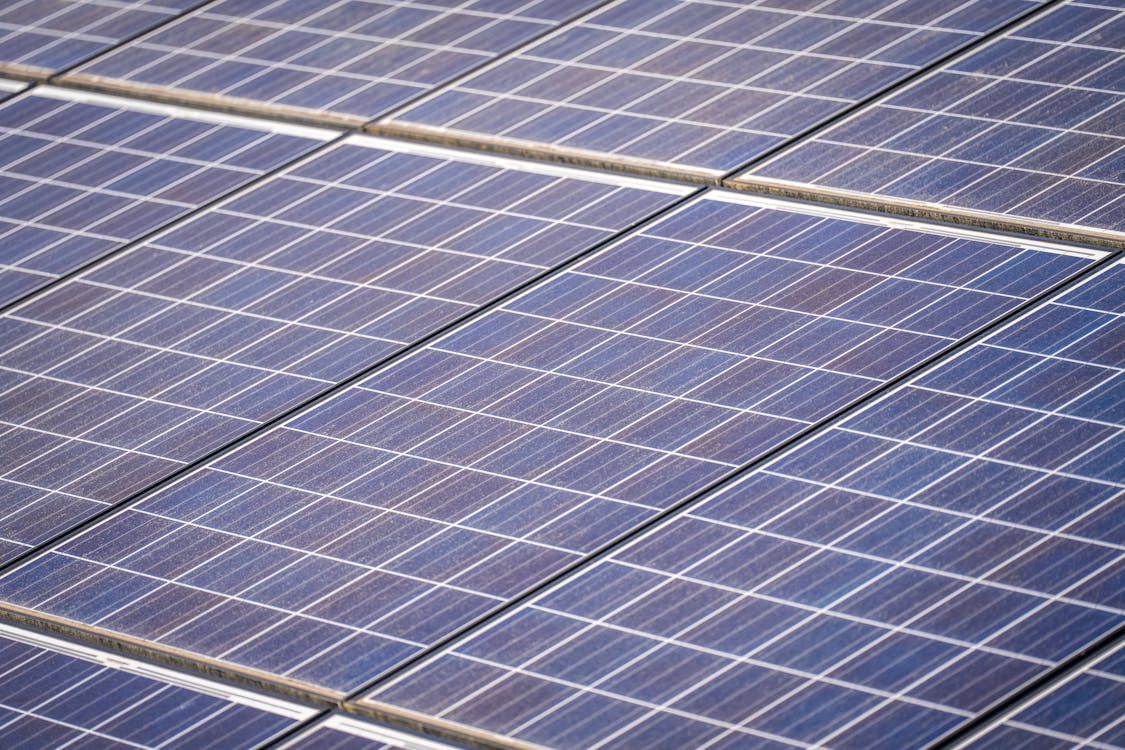
Solar panels. Photo: Pexels
OHISAMA Programme
The OHISAMA initiative is a government-led programme in Japan aimed at validating space solar power systems (SSPS) through staged demonstrations, rather than immediate large-scale deployment. It is coordinated primarily by the Japan Aerospace Exploration Agency (JAXA), in collaboration with industry and academic partners.
The programme focuses on microwave-based wireless power transmission, typically within the 2.45 GHz ISM band, and secondarily at 5.8 GHz. It uses phased-array transmitters for electronic beam steering, real-time beam shaping, and automatic shut-off if alignment is lost.
Early demonstrations target system-level efficiencies of approximately 10–15%, with radio frequency (RF)-to-direct current (DC) conversion efficiencies at the rectenna element level exceeding 70–80%.
Strategically, OHISAMA aims to assess the feasibility of continuous, weather-independent baseload power generation, while addressing key challenges in safety, controllability, and scalability before progressing towards any gigawatt-scale deployment.
“OHISAMA” (おひさま/お日様) means “sun” in Japanese, carrying a warm and personified nuance that reflects the programme’s focus on harnessing solar energy as a dependable, life-sustaining resource.
The programme demonstrates Japan’s intent and positioning of SBSP as a strategic, long-term research priority, in line with national sustainability goals as well as energy needs. Presently 90% of Japan’s energy is imported, and generating solar energy on land is challenging with its a high urban population concentration. The country is also targeting carbon net-zero emissions by 2050, phasing out fossil fuels and increasing the renewable energy share to 38% by 2030.
SPSB is increasingly recognised by global organisations and institutions, including the World Economic Forum, as a potential frontier for achieving a truly clean, abundant, and secure energy future. Satellites in geostationary orbit can harness uninterrupted flow of sunlight, offering a stable and high-yield energy source.
Global interest in SBSP has been gaining traction. China is advancing the technology through the “Zhuri” project, led by Xidian University under the Chinese Ministry of Education. The initiative aims to deploy a kilometre-long solar-harvesting satellite in orbit by 2030, supported by a ground receiving and tracking facility.
In the United States, an array of private companies have started up to develop SBSP devices, some with backing from the United States military. Among them, Aetherflux intends to deploy a constellations of satellites into low Earth orbit to beam down solar power back to Earth, with a stated focus on operational safety. The United Kingdom government has also been exploring and developing SBSP capabilities as part of its pathway towards achieving its national net-zero goals.
Despite this growing momentum, significant hurdles remain. The Japanese Aerospace Exploration Agency (JAXA) has highlighted that large-scale deployment of SBSP satellites is still constrained by high launch costs, even as this has declined over the years. Technical and regulatory considerations also persist, including potential interference with aircraft and telecommunications systems, which in turn underscores the importance of strategic placement of receiving stations.
For now, Japan’s demonstration represents an incremental but important step forward. With energy needs and sustainability goals in mind, it is likely that, when the time comes, SBSP initiatives will properly take shape and evolve into a viable component of future energy systems. Japan has also proposed potential applications beyond Earth, including powering Lunar infrastructure for future unmanned or manned missions.
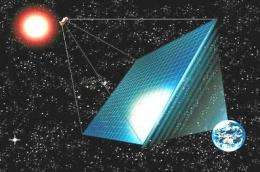
An early rendition of SBSP technology. Photo: JAXA (Japan Aerospace Exploration Agency)





Welcome to the Aerospace Singapore Digital beta site! Feel free to explore, leave your feedback, or sign up for our mailing list!
Sign up for our free newsletter and never miss a beat! Be the first to know about our latest articles, latest news and trends in our industry.